Showing posts with label teens. Show all posts

Friday, December 9, 2011

Princess Academy

Image credit: LibraryThing.com

Hale, Shannon. Princess Academy. New York: Bloomsbury Children's Books, 2005.

Annotation: Miri goes to a princess academy with other girls from her village after the prince announces he will marry someone from that region.

Book talk:
I don’t want to go. All the teenage girls have to go to a princess academy. The prince said he will choose someone to marry from our region, but we are considered too uncultured and uneducated, so this academy is supposed to make us better. But I don’t even know if I want to be royalty. The academy is so far away from our home. Although I sometimes feel like an outsider in the community because I do not work in the quarry, I love our mountain home, my family and friends. I dream of staying here. What should I do?

Teen Recommended:
  Megan, 16, recommended this book: "[I like] fantasy. I like the magic."

Awards:
  • Newbery Honor Book
  • New York Times, Book Sense, and PW Best Seller
  • A Book Sense Pick for Fall 2005
  • An ALA Notable Children's Book
  • 2007 Beehive Award winner
  • A New York Public Library 100 Titles for Reading and Sharing
  • A New England Booksellers Association Top 10 Titles for Fall
  • A Book for the Teen Age by The New York Public Library
  • Honorable Mention for "Favorite Novel of the Year," PW's 2005 Cuffie Awards
  • Winner of the 2006 Utah Children's Book Award
  • A Bank Street College Best Children's Books of the Year, starred entry
  • Nominated for the 2008 Arizona Grand Canyon Reader Award
  • Nominated for the 2008 Colorado Children's Book Award
  • Nominated for the 2008 South Carolina Young Adult Book Award
  • Nominated for the 2008 Young Reader's Choice Award, sponsored by the Pacific Northwest Library Association
  • Nominated for the Illinois 2008 Rebecca Caudill Young Reader's Book Award
  • Nominated for the 2010 Maud Hart Lovelace award (Minnesota)
  • A 2007 DCF Voting Top Ten (Vermont)
  • A Salt Lake Tribune Best Book of 2005
  • Recommended Reads for Kids 2005 (Dover Community News)
Awards source: http://www.squeetus.com/stage/princess_reviews.html

Extras:

Wednesday, December 7, 2011

Fantasy genre

Fantasy works for some teens but not for others. Check out what these teens had to say about their favorite genres:

"[I like] fantasy because they are interesting."
-- Ambrea, 13

"I love adventure with heroes of all kinds."
-- Christine, 13

"[I like] fantasy. It explains me."
-- Cory, 14

"I read fantasy because I'm interested in learning about life."
-- Kelsey, 12

"[I like] fiction because it's made up but still feels real."
-- Nicole, 14

"My favorite genre is survival because it is normally very suspenseful and involves a character being put in life-or-death situations."
-- Haley, 12

"I read young adult fantasy and fairy tales. I love to read so I'll read just about anything."
-- Ashley, 15

Entwined

Image credit: LibraryThing.com

Dixon, Heather. Entwined. New York: Greenwillow Books, 2011.

Annotation: After Azalea’s mother dies, her father, the King, wants his daughters to go into mourning. Refusing to give up dancing, the sisters enter the enchanted path to dance the night away, but there is a cost.

Book talk:
Will they become Entwined? After her mother died, the King forbade Azalea and her eleven sisters to dance anymore. But how can they do that? Not only did they lose a mother, but now they have lost what they have enjoyed the most. However, the sisters found a way. Similar to The Twelve Dancing Princesses, the sisters sneak off in an enchanted passage to dance the night away with the Keeper. All seems great at first, but the Keeper might not be what he seems. Will they be able to protect their kingdom, or will they become Entwined?

Enjoy the book trailer from Harper Collins:


Awards: None.

Extras:


Sunday, November 13, 2011

The House on Mango Street

Image credit: LibraryThing.com
Cisneros, Sandra. The House on Mango Street. New York: Alfred A. Knopf, 1984.

Annotation: A young girl grows up in the Latino section of Chicago who works to reinvent her self as she interacts with people from her neighborhood.

Book talk:
The House on Mango Street is not the perfect house. Esperanza is a dreamer, so when her family finally decided to get a house instead of renting, she expected one more like what she saw on TV. But alas, the House on Mango Street wasn’t that. “It’s small and red with tight steps in front and windows so small you’d think they were holding their breath.” But this is where her family is moving so this is where she has to stay. The book's series of stories shares many perspectives of Esperanza’s new neighborhood. At that house, there were some good times full of beauty, but there also were some bad times that breaks the heart. So now she has turned to writing and dreams of getting a new home, one where she can be herself. So what happens to Esperanza? How does Mango Street affect her? Does she ever leave The House on Mango Street?

Award: Before Columbus Foundation's American Book Award

Sunday, November 6, 2011

The Sisterhood of the Traveling Pants

Image credit: LibraryThing.com
Brashares, Ann. The Sisterhood of the Traveling Pants. New York: Delacorte Press, 2001.

Annotation: A pair of pants magically fits four best friends well, so they decide to send the pants around to each other while they spend the summer apart for the first time.

Book talk:
It’s our first summer apart. Bridget the athlete is headed for a soccer camp in Mexico. Lena the beauty is visiting her grandparents in Greece. Tibby the rebel is working at a job here. And I, the one with the bad temper, is visiting my dad in South Carolina. Will we have fun and forget each other? It’s not possible because we formed a pact. We each are going to take turns wearing this pair of jeans that miraculously fits all of us and then send it on to the next Sister. This summer is going to be full of adventure, love, friendship and good times, though there might be some lessons learned and some disappointments, too. But the pants are going to witness it all and keep us connected. We made a pact and formed a sisterhood. It’s going to be an incredible summer for The Sisterhood of the Traveling Pants.

Awards:
  • ALA Best Books for Young Adults
  • Indiana Young Hoosier Award
  • Iowa Teen Book Award
  • Maryland Black-Eyed Susan Award
  • New Jersey Garden State Teen Book Award
  • Rhode Island Children's Book Award
  • Tennessee Volunteer State Book Award
  • Texas TAYSHAS High School Reading List
  • Washington Evergreen Young Adult Book Award
  • Pacific Northwest Young Readers Choice Award
  • Missouri Gateway Readers Award
  • Book Sense Book of the Year
  • Texas TAYSHAS High School Reading List

Upstate

Image credit: LibraryThing.com
Buckhanon, Kalisha. Upstate. New York: St. Martin’s Press, 2005.

Annotation: A boyfriend and girlfriend from Harlem correspond about their life challenges through letters after the guy is sent to jail for killing his father. 

Book talk:
Antonio writes, “Baby, the first thing I need to know from you is do you believe I killed my father? I need to know if you believe what everybody saying about me because I need to know if you go my back.” Natasha responds, “I got your back baby, cause I know you would do the same for me.” [Pass books around to show the format.] And so starts the letters of 17-year-old Antonio and 16-year-old Natasha when Antonio is sent to prison for killing his father. They exchange letters, vowing to stay together. But each have their own problems and start leading separate lives – Antonia with jail and Natasha with facing tough decisions on the outside. Will their relationship stay strong? Will the letters be enough to keep them together? Follow the course of their lives while Antonio is Upstate.

Awards:
  • ALA Alex Awards Winner (Adult for Young Adults)
  • Audie Award Winner, Literary Fiction

Sunday, October 30, 2011

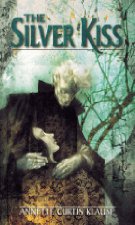
The Silver Kiss

Image credit: LibraryThing.com
Klause, Annette Curtis. The Silver Kiss. New York: Delacorte Press, 1990.

Annotation: A mysterious young man with a dark secret shows up and helps a teenage girl dealing with a dying mother and an emotionally absent father in a town that recently had a string of strange murders.

Book talk:
Should I let him in? He had blood on his face the other day. He was eating something. A bird? But he seems lonely and full of despair. Like me and how my father is always with my mother at the hospital. It’s just me at this house alone all the time because they won’t let me see her. And now my best friend is moving away. Maybe he’ll understand about loneliness and the pain of death. But what about the blood? And the murders here recently? What if he is the killer? I believe he’s been watching me. But again his voice sounds like he’ll understand. Should I let him in?

Awards: 
  • 1991 Locus Award for first novel
  • Oklahoma Sequoyah Young Adult Book Award
  • Maryland Black-Eyed Susan Award
  • South Carolina Children's Book Award
  • California Young Reader Medal

Sunday, October 23, 2011

The First Part Last

Image credit: LibraryThing.com
Johnson, Angela. The First Part Last. New York: Simon & Schuster Books for Young Readers, 2003.

Annotation: Sixteen-year-old Bobby finds outs his girlfriend is pregnant and learns to balance being a teenager and a new parent.

Book talk:
What’s the right thing?
This is what 16-year-old Bobby asks himself in The First Part Last after he finds out his girlfriend is pregnant. Told in Bobby’s voice using poetic language, the chapters alternate between him asking this question in the past and him living with his decisions in the present.  But don’t get the idea that the author glosses over the subject. Instead, Angela Johnson faces the topic head on, capturing Bobby’s emotional ups and downs as he balances his love for his daughter with his own insecurities with his situation. “This little thing with the perfect face and hands doing nothing but counting on me. And me wanting nothing else but to run crying into my own mom’s room and have her do the whole thing.” So what does Bobby do?
What’s the right thing?

Awards:
  • ALA Michael L. Printz Award,
  • Abraham Lincoln Book Award Master List (IL),
  • ALA Best Books For Young Adults
  • ALA Quick Picks for Reluctant Young Adult Readers
  • Alabama Author's Award
  • Booklist Editors' Choice
  • CBC/NCSS Notable Social Studies Trade Book
  • Charlotte Award Suggested Reading List (NY)
  • Coretta Scott King Award (ALA)
  • Florida Teens Read Master List
  • Garden State Teen Book Award Nominee (NJ)
  • Gateway Readers Award Nominee (MO)
  • Georgia Peach Book Award Master List
  • Green Mountain Book Award Master List (VT)
  • Gryphon Award for Children's Literature
  • Iowa Teen Award Master List
  • IRA Young Adults' Choices
  • Rosie Award Nominee (IN)
  • Sequoyah Young Adult Master List (OK)
  • South Carolina Book Award Nominee
  • Volunteer State Book Award Master List (TN)
  • YARP Award Master List (SD)

    Am I Blue?

    Image credit: LibraryThing.com
    Bauer, Marion Dane, ed. Am I Blue? Coming Out from the Silence. New York: Harper Trophy, 1994.

    Annotation: A collection of short stories ranging in different genres and from different young adult authors give a voice to young adults who are gay or a lesbian or who have a homosexual parent.

    Book talk:
    “A myth is yours only if you choose to own it.”
    Although we live in a country that claims it is a melting pot, not all of its residents have had a voice in literature. Two boys – one Puerto Rican, Polish and Irish and one half-black half-Chinese – attempt to take one of the oldest stories in the world and give a voice to everyone – including all sexual preferences. Told in a film treatment style, the story shares the journey of their love and how they share it with the rest of the world. But “The Honorary Shepherds” isn’t the only tale. Am I Blue? has something for everyone – fantasy and realism, sad stories and funny stories, and stories about first love and death. What holds this collection of short stories together is a thread of giving the voiceless a voice. Of owning myths or changing the myth that homosexual people aren’t among us. Because they are, and each story gives an honest account of how it feels to grow up being gay or a lesbian or with a homosexual parent. 

    Awards:
    • ALA Quick Pick for Reluctant Young Adult Readers
    • Horn Book Fanfare
    • ALA Best of the Best Books for Young Adults
    • New York Public Library Books for the Teen Age
    • ALA Gay, Lesbian, Bisexual, and Transgendered Book Award
    • Minnesota Book Award
    • ALA Best Book for Young Adults
    Awards source: www.harpercollins.com/books/Am-Blue-/?isbn=9780064405874

    Sunday, October 9, 2011

    Anne Frank: The Diary of a Young Girl

    Image credit: LibraryThing.com
    Frank, Anne. Anne Frank: The diary of a young girl. (B.M. Mooyaart-Doubleday, Trans.). New York: Doubleday & Company Inc., 1967.

    Annotation: A Jewish teen details her life in a diary while in hiding from Nazi Germany during World War II.

    Review: 
    Anne Frank is the story that has captured the world’s heart since its publication in 1947. It is the true account of a Jewish teen girl living in Amsterdam during World War II. For her thirteenth birthday in 1942, Anne is given a diary, which she treasures and confides her most personal thoughts. Shortly after that, her family – mother, father and older sister – goes into hiding with another family and an older gentleman. Anne’s family and the others hide in the “secret annex” for a little more than two years, with Anne sharing her thoughts and observations in the diary all the while. 

    She documents the fears and the claustrophobic conditions of her life in hiding along with the things many teenagers experience when growing up – defining oneself, laughter, quarrels, jealousy and even first love. Because the diary shares Anne’s raw feeling, it gives readers a rare glimpse into what it was like to be a Jewish teen during World War II and to live with a fear of being discovered yet still hoping for deliverance. The book also provides the tragic ending to Anne after her diary expectantly ends Aug. 1, 1944, and how her diary is published.

    Award: YALSA Best Books for Young Adults

    Sunday, October 2, 2011

    The Braid

    Image credit: LibraryThing.com
    Frost, Helen. The Braid. New York: Frances Foster Books, 2006.

    Annotation: During the Highland Clearances in Scotland, two sisters weave braids and tales of their experiences with alternating narrative poems.

    Review:
    Two sisters – Sarah and Jeannie – braid their hair together and cut it in the middle so that each sister has one half. Then they both go on separate journeys during the Highland Clearances in Scotland. Sarah moves with her grandma to another place in Scotland while Jeanie travels with the rest of the family to Canada. With their braids, the sisters remember each other and share their experiences with loss, love and perseverance.

    What makes The Braid so unique is that Helen Frost uses a formal structure based on Celtic knots, which includes narrative poems in the alternating voices of the two sisters and praise poems about something in the narrative poem. The poems are “braided” together by including similar lines. Although the reader can tell it is a poem, the story still is easy to read. The narrative comes off so naturally the reader doesn’t realize how formal the structure is until the notes at the end of the book.

    The structure makes The Braid a great book for teens to get rid of any preconceived notions about poetry and realize how accessible it can be. The sisters also are young adults who go through difficult experiences the teen could relate to, including the loss of family members and teen pregnancy, in addition to the historic elements, such as boat crossings. The story does a beautiful job weaving the sisters’ experiences together and would bring in the average teen reader.

    Awards:
    • YALSA "Best Books for Young Adults, 2007"
    • 2007 Lee Bennett Hopkins Poetry Award Honor Book
    • 2007 honor book: "Lion and the Unicorn" Award for Excellence in North American Poetry
    • School Library Journal "Best Books of the Year, 2006"
    • Kirkus Reviews "Editor's Choice, 2006"
    • NCSS-CBC Notable Trade Book in the Field of Social Studies
    • Notable Book in Historical Fiction, 2007, for the Children's Literature Assembly (CLA) an affiliate of the National Council of Teachers of English (NCTE)
    • Bank Street College of Education Children's Book Committee "Best Children's Books of the Year, 2007"
    • Cooperative Children's Book Center "CCBC Choices 2007"
    • Special Recognition: 2007 Paterson Prize for Books for Young People
    • Pennsylvania Young Reader’s Choice Awards Master List
    • Texas TAYSHAS High School Reading List

    Forever

    Image credit: LibraryThing.com
    Blume, J. (1975). Forever. New York: Pocket Books.

    Annotation: Two high school seniors experience the highs and lows of love they are convinced will last forever.

    Review: 
    Katherine and Michael are convinced their love will last forever. They meet on New Year’s Eve and fall into a journey full of the joy and curiosity of a first love. Who wants to think about the end for the relationship? They are prepared to be together for the rest of their lives, but then they are separated for a summer.

    The story captures what falling in love for the first time is like, with all the ups and downs of saying “I love you” and fights. Although Forever has explicit scenes of teen sex, they are honest, realistic accounts that show the first time isn’t always a sweeping epic but can be awkward. Those scenes sometimes have influenced people to want to ban Forever from teens, but because of the book’s honesty, it can be a good starting point for discussion of teen pregnancy, using protection and love lasting forever. Judy Blume also includes a note about safe sex at the beginning of the book. Teens going through similar experiences could find the book relatable. Although the book was written in the 1970s, few of the references are dated (mostly that Robert Redford was the teen heartthrob and the kids can drink at age 18).

    Forever also includes references to other stressful topics teens deal with, such as suicide and a grandparent’s death. However, these topics could have been given more description to capture the depth of emotions felt because it seemed they were backdrops to the main emotional struggle: first love. Some of the relationship situations also could have used more emotional depth. For example, when Katherine is dealing with a new attraction, there could have been more emotional descriptions to prepare the reader for the way she reacted. In general, the story is a quick read, but the main focus of first love still is relatable for teens, capturing how one can react to the first time.

    Award: 1996 Margaret A. Edwards Award Winner
    Award source: http://www.judyblume.com/books/ya/forever.php